Guides
Human furniture and objectification play: forniphilia explained
Strict mistresses, live now
See allHuman furniture is exactly what it sounds like: a person used as a footstool, a table, a chair or a coat stand, still and silent while someone else carries on as if they were an object. The fetish has its own name, forniphilia, a famous place in 20th-century art, and a natural home in femdom, where the footstool at a mistress's feet is a classic image. This page covers where the idea comes from, how it's played, the related worlds of statues and living dolls, what little research exists, and the physical risks of holding still, which are more serious than they look. Search engines also use the phrase for an unrelated true-crime story; this page is only about consensual play between adults.
Forniphilia, and where the word comes from
Wikipedia describes human furniture as furniture in which a person's body is used as a tray, footstool, chair, table, cabinet or similar item, sometimes with a sculpture standing in for a real person. Forniphilia is the fetish attached to it. Wikipedia credits the word to the bondage artist Jeff Gord, who ran a website on the subject called House of Gord, though we couldn't find when he coined it. As Gord described it, forniphilia in bondage usually means a tightly bound person kept still for a long time, and he said his sessions generally didn't exceed two hours and should only be carried out by experts. That's one artist's rule of thumb, not a medical limit.
Allen Jones's furniture
The best-known human furniture is in a gallery. In 1969 the British pop artist Allen Jones made Hatstand, Table and Chair: three slightly larger-than-life fibreglass women in wigs, corsets, gloves and leather boots. Chair lies on her back with her legs raised as the backrest and a cushion on her thighs; Table kneels on all fours with a sheet of glass on her back; Hatstand stands with upturned hands for hooks. They were cast by a firm that made shop mannequins, in editions of six.
They caused a storm. Feminists protested when they were first shown in 1970, the Guardian suggested they be banned from exhibition, and the film theorist Laura Mulvey wrote about the series for the feminist magazine Spare Rib. Jones said it was "an accident of history" that they coincided with the arrival of militant feminism. Chair was hit with stink bombs at the ICA in 1978, and on 8 March 1986, International Women's Day, a visitor to the Tate damaged it with paint stripper. The art market took a different view: one set sold at Sotheby's in 2012 for 2.6 million pounds.
The idea also reached the cinema. Stanley Kubrick asked Jones to make similar pieces for A Clockwork Orange, released in 1971. Jones declined because no payment was offered but let Kubrick use the idea, and furniture reminiscent of his work appears in the film's milk bar. In femdom art, the Japanese artist Namio Harukawa, who died in 2020, returned to human furniture again and again.
Footstool, table, chair: how it looks in femdom
- Footstool. He kneels on all fours or curls up, and she rests her feet on his back while she reads, works or ignores him. The simplest and most common form.
- Table. He holds his back flat and level, carrying a tray, a drink or her phone, and the test is not to spill anything.
- Chair. She sits on him; it overlaps with facesitting and trampling, and needs the same care with weight.
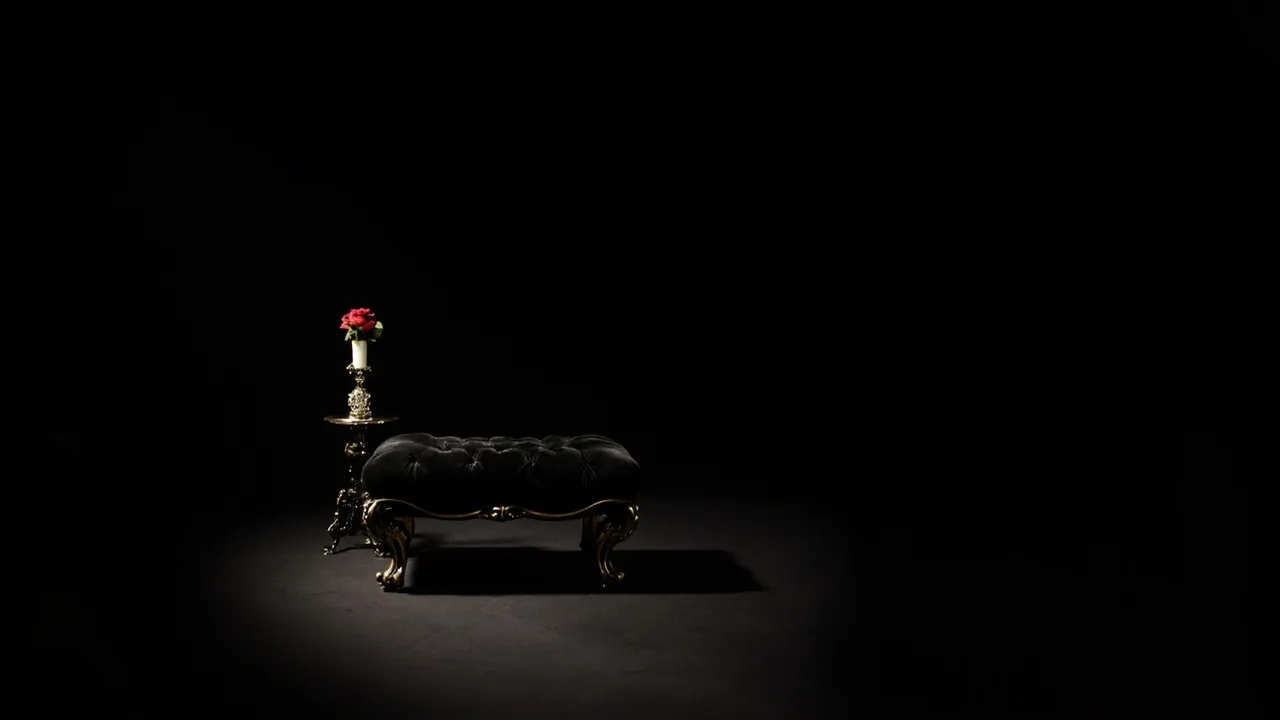
- Statue. He holds a pose, a coat stand or a candle holder without the candle, while life goes on around him.
The physical part is only half of it. Objectification play is psychological: not being addressed, being moved without a word, being useful rather than seen. For some subs that's deeply calming; for others it's the sharpest form of degradation. Talk about which it is for you before you start.
Statues, dolls and living dolls
Close cousins of human furniture have their own names. Agalmatophilia is attraction to statues, dolls, mannequins or similar figures, which, Wikipedia notes, can include the fantasy of turning someone into one, and it can overlap with BDSM or latex fetishes. It's one of the few such interests with a real literature: a 1975 paper called it the statue syndrome, and the sexologist Iwan Bloch wrote of the "Venus statuaria" in 1907. The Greek myth of Pygmalion, the sculptor who fell in love with his statue, is the classic version.
Dollification is the living version: dressing, moving and behaving like a doll, often styled and posed by a partner. An LGBTQ+ thesaurus, Homosaurus, defines it as acting like a living doll for aesthetic or sexual gratification, with rubber dolling as a related term. In femdom it sometimes overlaps with feminization, and our list of fetishes puts it alongside its neighbours.
What research says, which isn't much
We couldn't find a single peer-reviewed study of consensual objectification play or human furniture. The objectification research that does exist, such as work by Loughnan and colleagues, looked at how people respond to images of objectified others, and reportedly found viewers attributed less mind and moral concern to them. That says nothing about two consenting adults who've agreed to play with the idea, and anyone who claims the research proves this kind of play harmful, or harmless, is overreaching. What's well established is the physical side.
The physical risks of holding still
Stillness looks safe. It isn't automatically. Holding a position keeps muscles contracted, which restricts blood flow, and pressure in the wrong place compresses nerves. Wikipedia's article on radial neuropathy describes the classic "Saturday night palsy", where an arm draped over a chair edge for too long compresses the radial nerve; recovery from that kind of compression takes two to twelve weeks. The common fibular nerve, on the outside of the knee, can be damaged by prolonged pressure too, and the typical result is foot drop.
- Start with minutes, not hours. Build up only once you know how your body copes.
- Pad the knees and change position often. A cushion or folded towel under the knees, and a short break to move every few minutes.
- Keep weight sensible. A drink on a tray is fine; a person standing or sitting on a back needs care, practice and a firm surface.
- Never rest limbs over hard edges, and never gag someone who's holding still. They need to be able to say something's wrong.
- Agree a signal and use it. Numbness, tingling, cramp or dizziness ends the position at once.
Human furniture on cam
Online, human furniture becomes a test of obedience and stillness: she orders you into a table position with a glass on your back, sets a timer, and carries on with her evening while you hold it. It pairs naturally with femdom tasks and the positions in our guide to BDSM positions. Few performers list it as a style, so ask in free chat before booking, agree limits and a time, and keep the risks above in mind even when she's on a screen. The strip at the top shows strict mistresses live now who'll happily treat you as part of the room.
Quick answers
What is human furniture in BDSM?
A negotiated scene in which a submissive plays an object: a footstool, a table, a chair, a coat stand. Wikipedia describes human furniture as furniture in which a person's body is used as a tray, footstool, chair, table or other item.
What is forniphilia?
The fetish for people used as furniture, especially in bondage imagery, where the person is bound tightly and kept still for a long time. It's sometimes called furniture fetishism.
Who coined forniphilia?
Wikipedia credits the bondage artist Jeff Gord, who ran a website devoted to it called House of Gord. We couldn't find a date for when he first used the word.
What is a human footstool?
One of the simplest forms of human furniture: the submissive kneels on all fours or curls up so the dominant can rest her feet on his back. It combines service, stillness and being quietly used.
What was Allen Jones's Chair?
A 1969 fibreglass sculpture of a woman lying on her back, legs raised as the backrest, with a seat cushion on her thighs. It's part of a trio with Table and Hatstand, it's in the Tate's collection, and it was attacked with paint stripper in 1986.
Was A Clockwork Orange inspired by Allen Jones?
Partly. Stanley Kubrick asked Allen Jones to make similar sculptures for the film; Jones declined because no payment was offered but let Kubrick use the idea, and furniture reminiscent of his work appears in the film's milk bar.
What is agalmatophilia?
Attraction to statues, dolls, mannequins or similar figures, which can include the fantasy of turning someone into one. It's one of the few such interests with an academic literature, including a 1975 paper that called it the statue syndrome.
What is dollification?
Dressing and behaving like a living doll, often directed by a partner who styles and poses the doll. It overlaps with objectification play and, in femdom, sometimes with feminization.
How long can you hold a human furniture position?
There's no authoritative limit. Holding still restricts blood flow and pressure can injure nerves, so start with a few minutes, change position often, pad the knees, and stop at any numbness or tingling. One bondage artist kept his sessions under two hours, but that's not a medical guideline.