Guides
Shibari ties, rope and styles: from the single column to takate kote
Bondage mistresses, live now
See allShibari has a vocabulary of named ties, and once you know a dozen of them, rope photographs and rope classes start making sense. The single column tie goes around one thing; the double column ties two things together. Takate kote is the classic box tie that holds the arms behind the back, karada and hishi are decorative body harnesses, and futomomo folds a leg. This page explains what each tie is and what it's for, the main styles, and the rope itself. It deliberately doesn't teach you how to tie them: rope is learned with hands and a teacher. For the history and the safety basics, start with our guide to what shibari is.
Shibari, kinbaku and Western bondage
Wikipedia's article on rope bondage draws the usual distinction: Japanese bondage is more concerned with the artistry of the process, while Western bondage focuses on achieving restraint. Within Japanese rope, kinbaku means tight binding and shibari simply means binding. Some Westerners use shibari for the visual side and kinbaku for the erotic, emotional side, but Wikipedia notes there's no evidence Japanese practitioners make that distinction. The word kinbaku first appeared in the magazine Kitan Club in August 1952; shibari became the popular Western term from the 1990s.
Column ties, where everyone starts
A column is simply the thing you're tying: a wrist, an ankle, a waist, a thigh, a chair leg or a bed post. A single column tie goes around one column and is, as one beginner's guide puts it, probably the most common shibari tie of all. It's the basis for rope cuffs and for anchoring a line to something else. A double column tie binds two columns together, both wrists, say, or a wrist to an ankle, holding them side by side without tightening on either.
Two habits from beginners' guides are worth knowing even if you never tie: leave room for a couple of fingers under the rope, and never hang a person's weight from their wrists, which can cause serious nerve damage.
Takate kote, gote and the box tie
Wikipedia calls ushiro takate kote the foundational form for most shibari ties: a box tie that surrounds the chest and arms, with the arms folded behind the back. In English it's usually called the box tie or simply the TK. You'll also hear gote; the terms are often used interchangeably, though some teachers distinguish them. Shibari vocabulary isn't standardised, and any one tie has many variants.
The TK is also the tie most associated with injury. A 2023 study in Cureus by Khodulev and colleagues described 16 nerve injuries in 10 people, 13 of them, or 81.3%, to the radial nerve, which runs around the back of the upper arm. The injuries followed full-body suspensions in which the hands were often tied in a box-tie position, with rope across the middle third of the upper arm. The sample is small and the study can't give a risk rate, but it's why serious rope teachers treat the TK as something you learn in person.
Harnesses and body ties
- Karada. Japanese for body. In the West it means a full-body harness, sometimes called a rope dress. On its own it restrains very little; it's about the look and the feeling of being held.
- Hishi. A tie built from diamond shapes, often used down the front of a karada.
- Kikkou. A body tie that finishes in a tortoise-shell pattern of hexagons across the upper torso.
- Hip harness. A harness around the hips and thighs, used as an anchor point and in suspension work.
- Chest harness. Any of many upper-body harnesses that leave the arms free, a gentler start than a TK.
Leg ties and folded positions
Futomomo binds the calf or shin to the thigh, folding the leg. It's a staple of floor work and of suspension sequences. The related frog tie binds the ankles to the thighs. Ebi, meaning shrimp, is a folded seated position that bends the body forward; Wikipedia notes its history as a torture technique, citing a 1742 Edo-period legal code for the "ebizeme", and says its use in BDSM can be considered a form of semenawa.
Floor work, suspension and semenawa
Newaza is floor work: ties and transitions done with the person lying or kneeling, often slow and intimate. Tsuri is suspension, lifting a person partly or fully off the ground; kataashi tsuri, for example, suspends one leg. Semenawa is usually glossed as rope torture: intense, uncomfortable ties used to push the person being tied, which needs an experienced rigger and a partner who knows exactly what they've agreed to. Suspension is where the serious injuries in the Cureus study happened, and it should only be done by people trained in person, with proper rigging points and someone watching.
The rope itself
| Rope | Feel | Notes |
|---|---|---|
| Jute | Light, with lots of bite and friction | The classic shibari rope; usually oiled or waxed to soften it |
| Hemp | Heavier and a little fuzzier | Strong and grippy; can shed fibres |
| Cotton | Soft and gentle on skin | Can stretch and lose its shape; good for practice |
| Synthetic | Smooth and slick | Washable, many colours; knots slip more easily |
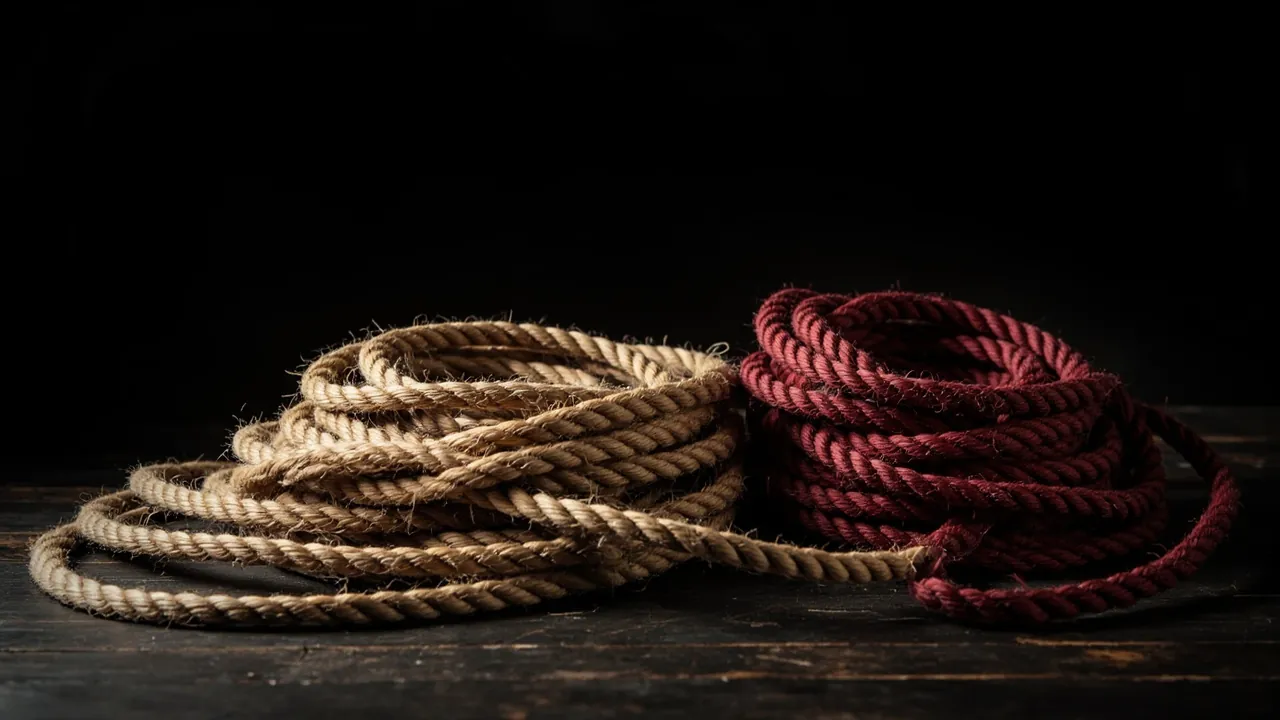
Wikipedia gives the usual natural rope as around 6 mm thick, sometimes 4 mm, in lengths of 6 to 8 metres in Japan and often 7 to 8 metres in the West. Synthetic rope, popular in the US for its colours and washability, is most often 6 mm and sold in 10-metre lengths. Some riggers also use bamboo poles, called take, to support poses and vary tension. Whatever you choose, check rope for wear before every use.
Names you'll hear
The person tying is the rigger, rope top or, in Japanese, nawashi or bakushi; the person being tied is the rope bottom, sometimes affectionately the rope bunny. Among the historical names, the painter Seiu Ito, born in 1882 and died in 1961, is regarded as the father of modern kinbaku. Eikichi Osada brought rope to live stage shows from the 1960s, and in the 1980s Nureki Chimuo made a series of instructional videos, one of them titled Introduction to Shibari. The photographer Nobuyoshi Araki, born in 1940, made rope famous in fine-art photography, with shows from San Francisco to New York's Museum of Sex in 2018; in the same year a former model publicly alleged she'd been exploited, which led to protests at a Berlin exhibition.
Learning, and rope with a dominant woman
Every tie on this page is learned best in a class or with an experienced rigger, never from text alone, and the safety basics on our shibari page apply to all of them: nothing around the neck, safety shears always in reach, constant checks on hands and fingers, and never leave a tied person alone. A compressed radial nerve typically takes two to twelve weeks to recover, which is a long time to regret a shortcut.
In femdom, rope often runs the other way from the photographs: she ties him, or directs him through simple restraints on cam. Few cam performers list rope as a style, so ask in free chat before booking, and read the self-bondage rules on our bondage cams page before you ever tie yourself. The strip at the top shows who's live now.
Quick answers
What is a single column tie?
A tie around one thing, the column: a wrist, an ankle, a thigh, or a bed post. It's usually the first tie people learn, and it's the building block for cuffs and anchors.
What is a double column tie?
A tie that binds two columns together, such as both wrists, or a wrist to an ankle. It holds two things side by side without tightening on either.
What is takate kote?
The foundational upper-body tie of shibari, with the arms folded behind the back and rope around the chest and arms. In English it's often called a box tie. It's also the tie most linked to nerve injuries, so it should be learned in person.
Is gote the same as takate kote?
Often the two names are used interchangeably, though some rope teachers distinguish them. Shibari terms aren't standardised, and one tie can have many variants.
What is a karada?
Karada is Japanese for body, and in the West it means a full-body rope harness, sometimes called a rope dress. It has little restraining effect on its own and is mostly decorative, often made in a diamond pattern called hishi.
What is a futomomo tie?
A leg tie that binds the calf or shin against the thigh, folding the leg. It's a staple of floor work and of suspension sequences.
What rope is used for shibari?
Traditionally natural fibre, jute or hemp, around 6 mm thick and 7 to 8 metres long. Natural rope grips itself and holds knots well; synthetic rope is slicker, washable and comes in more colours.
What is the difference between shibari and kinbaku?
Kinbaku means tight binding and shibari simply means binding. Some Westerners use shibari for the aesthetic side and kinbaku for the erotic side, but there's no evidence that Japanese practitioners draw that line.
What is semenawa?
Rope torture: intense, uncomfortable ties used to push the person being tied. The folded ebi, or shrimp, position is often given as an example. It's advanced and needs an experienced rigger.