Guides
Sensation play, and what masochist really means
Dominant women live now
See allSensation play, also called sensual or sensory play, is the art of engaging the senses to heighten erotic pleasure. Wikipedia lists the classic tools as feathers, blindfolds, tickling, ice and massage oils, and notes that in BDSM it can include carefully controlled pain. It's one of the gentlest ways into kink and one of the most intense, depending entirely on how it's done. This page covers the tools, the science of why sensation feels so strong, what masochist really means, ideas to try, and the safety rules for cold and heat.
What sensation play is
Sensation play is about contrast and attention. A feather after fingernails, cold after warm, stillness after movement: each change makes the next touch feel louder. The person receiving often wears a blindfold, so they can't predict what's coming, and the person giving controls everything: the tool, the pace, the pressure and the pauses.
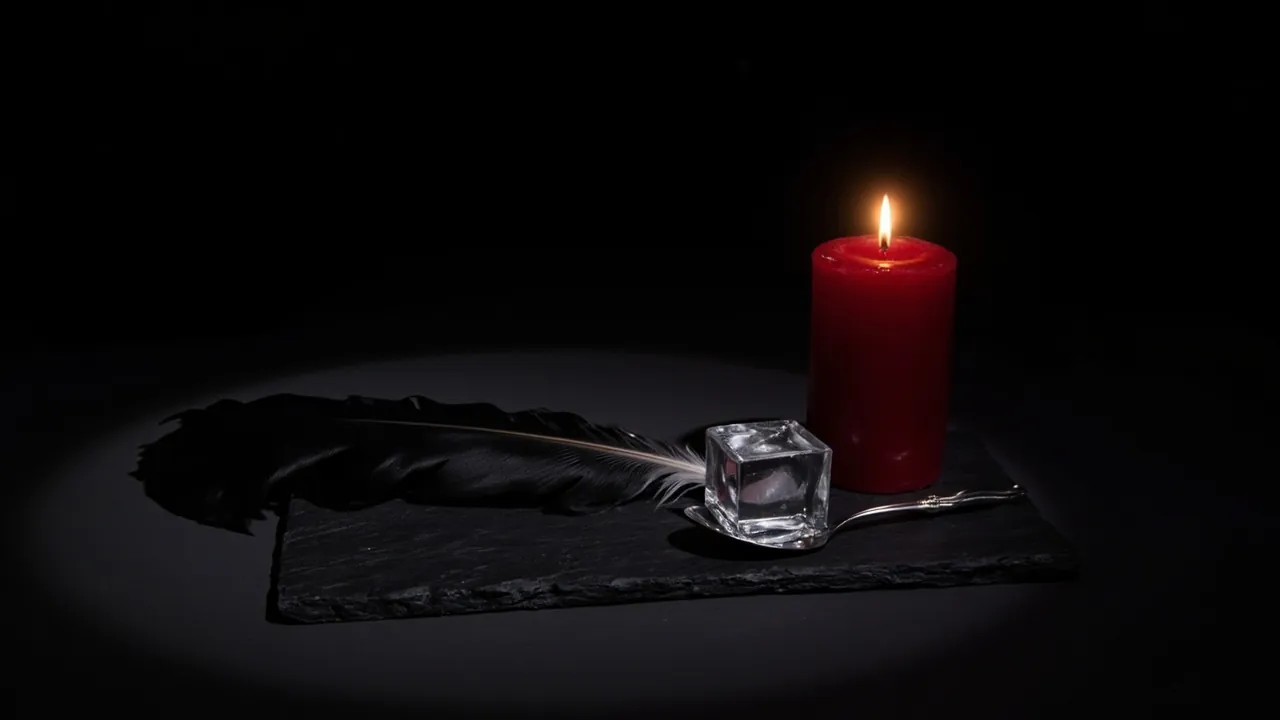
The toolkit is mostly household. Feathers, silk, fur, a soft make-up brush, an ice cube, a warmed spoon, massage oil and fingernails will fill an evening. The one specialist tool is the Wartenberg wheel, a stainless steel pinwheel with a handle of about 18 cm, which Wikipedia notes was designed to test nerve reactions and is also used as a sensation toy. Wax and impact are the stronger end of the same family; our guides to wax play and impact play cover those.
Why sensation feels so intense
The nervous system explains a lot. Heat starts to register as pain at around 43 degrees Celsius, when a receptor called TRPV1 switches on. Pain also travels along two kinds of nerve fibre: fast ones that carry signals at 5 to 30 metres a second, giving the first sharp sting, and slow ones at 0.4 to 2 metres a second, giving the dull ache that follows. A good dominant plays with exactly that gap.
Touch can also turn pain down. The gate control theory, proposed by Melzack and Wall in 1965, holds that non-painful input closes the nerve gates to painful input, which is why stroking after a sting feels so good. The body joins in too: the Cleveland Clinic notes endorphins are released with pain or stress, and also with exercise, massage, eating and sex. And not knowing matters. A 2013 study found that uncertainty about what was coming had a specific and potent effect in making pain feel stronger, which is the real secret of the blindfold.
Even tickling has a science. Psychologists as far back as 1897 distinguished knismesis, the light feather touch that makes skin crawl, from gargalesis, the heavier tickling that makes people laugh.
What masochist means
Dictionary.com defines a masochist as a person who is gratified by pain, degradation and the like, whether self-imposed or imposed by others, and more loosely as someone who finds pleasure in self-denial or submissiveness. The word comes from Leopold von Sacher-Masoch, the Austrian author of Venus in Furs, published around 1870, and it entered psychiatry in the late 19th century through Richard von Krafft-Ebing, whose Psychopathia Sexualis appeared in 1886.
Two things are worth knowing. First, masochism isn't a disorder in itself: the DSM-5 counts it as one only with clinically significant distress or impairment, and the WHO's ICD-11 lists no masochism disorder at all. A 2017 study of 1,040 adults even found masochism significantly linked with higher satisfaction with one's own sex life. Second, not every submissive is a masochist. As Wikipedia notes, many BDSM activities involve no pain or humiliation at all, just an exchange of power and control.
Do masochists feel less pain? The evidence is mixed. A 2022 review of ten studies found pain thresholds higher in submissive people, but a small 2022 study of 15 masochists and 15 controls found similar thresholds in both groups. What seems to differ is how pain is experienced in context, not the nerves themselves.
Sensation play ideas
- The feather trail. Slow, unpredictable strokes along the arms, neck and back.
- Texture tasting. Silk, then fur, then a stiff brush, then fingertips, with the receiver guessing each one.
- Hot and cold. A spoon warmed in a mug of hot water, then one chilled in iced water, alternated.
- Ice traces. An ice cube drawn in lines, always moving, followed by warm breath or a warm hand.
- The pinwheel. A Wartenberg wheel rolled lightly, never pressed hard.
- Warm oil. Massage oil warmed in the hands, a calm contrast to everything sharper.
- Scent and sound. With a blindfold on, perfume, a whisper, a bell, a long silence.
Safety for cold, heat and blindfolds
Wikipedia's article on sensation play is clear that in intense play safety and consent are of paramount importance. Agree a safeword, such as red for stop, and a physical signal too, since a blindfolded person can't see a gesture but can drop an object or squeeze a hand.
- Ice. Keep it moving. For comparison, the NHS advises wrapped ice on a sprain for up to 20 minutes every two to three hours; sensation play needs far less. Melting ice can form edges sharp enough to cut.
- Frostbite. Watch for skin that turns cold and firm, numb, red or pale. Rewarm with warm, not hot, water, and don't rub it, the NHS says.
- Dry ice. Never. At minus 78.5 degrees it causes severe frostbite.
- Raynaud's. People whose fingers and toes change colour in the cold should skip cold play or keep it very light.
- Heat. Anything warm should feel comfortably warm to your own wrist first; around 43 degrees is where heat turns to pain.
- Blindfolds. Keep blindfolded scenes reasonably short and check in often; prolonged sensory deprivation can cause extreme anxiety.
Marks happen more than people expect: a 2023 survey of 513 adults found BDSM marks and minor injuries were common and varied. Start light, and finish with aftercare.
Sensation play on cam
A mistress on cam can't hold the feather, but she can tell you exactly what to do with it, when, and for how long, which for many people is even more intense. Ice, a feather and a timer are all you need for a guided session. The strip at the top of this page shows dominant women live now, and our page on sensory deprivation covers the blindfold side of the same game.
Quick answers
What is sensation play?
Using touch, texture and temperature to heighten erotic feeling: feathers, silk, fur, ice, warm oil, a pinwheel, fingernails, sometimes with mild, carefully controlled pain. Wikipedia also calls it sensual or sensory play.
What does masochist mean?
A person who gets pleasure or gratification from pain or humiliation, whether self-imposed or imposed by others, or more loosely from self-denial. The word comes from the 19th-century writer Leopold von Sacher-Masoch.
Is masochism a disorder?
No, not in itself. The DSM-5 counts it as a disorder only when it causes clinically significant distress or impairment, and the WHO's ICD-11 lists no masochism disorder at all.
Are all submissives masochists?
No. Many BDSM activities involve no pain at all, only an exchange of power and control. Plenty of submissives dislike pain, and some masochists aren't submissive.
Is ice safe for sensation play?
Briefly, yes. Keep ice moving, never hold it on one spot for long, watch for skin that turns pale, firm or numb, and never use dry ice, which is cold enough to cause severe frostbite.
Do blindfolds make touch more sensitive?
Not physically. A 2011 study found short-term blindfolding didn't improve touch sensitivity. What makes blindfolded sensations feel stronger is uncertainty: not knowing what's coming intensifies how it feels.
Where does the word masochism come from?
The psychiatrist Richard von Krafft-Ebing brought it into clinical use in the late 19th century, naming it after the novelist Leopold von Sacher-Masoch, whose Venus in Furs describes a man who longs to be dominated by a woman.
What is a Wartenberg wheel?
A small stainless steel pinwheel on a handle, originally designed for doctors to test nerve reactions. In sensation play it's rolled lightly over the skin for a prickling feeling, and never pressed hard.
Can sensation play be done without any pain?
Yes, and most of it is. Feathers, silk, fur, warm oil and a blindfold can fill an entire scene with no pain at all. Pain is an optional extra for people who want it, agreed in advance.