Guides
What is BDSM? The acronym, masochism and the basics
Dominant women live now
See allBDSM is an umbrella term for erotic practices and role play involving bondage, discipline, dominance and submission, sadism and masochism. Researchers describe it as an overlapping acronym, and say the hallmark that separates it from abuse is mutual informed consent. It's far more common than its reputation, and modern psychiatry no longer treats it as a disorder. This page explains what the letters mean, where the words came from, how many people do it, and the safety basics that hold it together.
What the acronym stands for
BDSM packs three pairs into four letters:
- B and D: bondage and discipline. Restraint, rules and the consequences of breaking them.
- D and S: dominance and submission. Power exchange: one person leads, the other follows, by agreement.
- S and M: sadism and masochism. Giving and receiving pain, or intense sensation, for pleasure.
The pairs overlap, which is the point. Someone can love bondage with no pain at all, or enjoy pain with no power exchange, or live a dominance and submission relationship that rarely involves either. Femdom, where the dominant partner is a woman, is one direction within it; our guide to what femdom is covers that side.
The initialism itself is young. Wikipedia records its first known use in a Usenet post on 20 June 1991, and Dictionary.com dates it to the early 1990s. Before that, people spoke of S&M or leather; Etymonline dates the abbreviation S & M in print to at least 1965.
Where sadism and masochism got their names
Both words come from writers. Sadism is named after the Marquis de Sade, who lived from 1740 to 1814 and whose fictional characters take pleasure in inflicting pain. Masochism is named after Leopold von Sacher-Masoch, whose 1870 novella Venus in Furs tells of a man who asks a woman to dominate him. Sacher-Masoch did not approve of the use of his name.
The person who attached the names was the psychiatrist Richard von Krafft-Ebing, whose catalogue of sexual interests, Psychopathia Sexualis, first appeared in 1886; he coined masochism in the late 1880s, and sources disagree on the exact year. For decades both terms were treated as illnesses. That view has changed completely, as the next sections show.
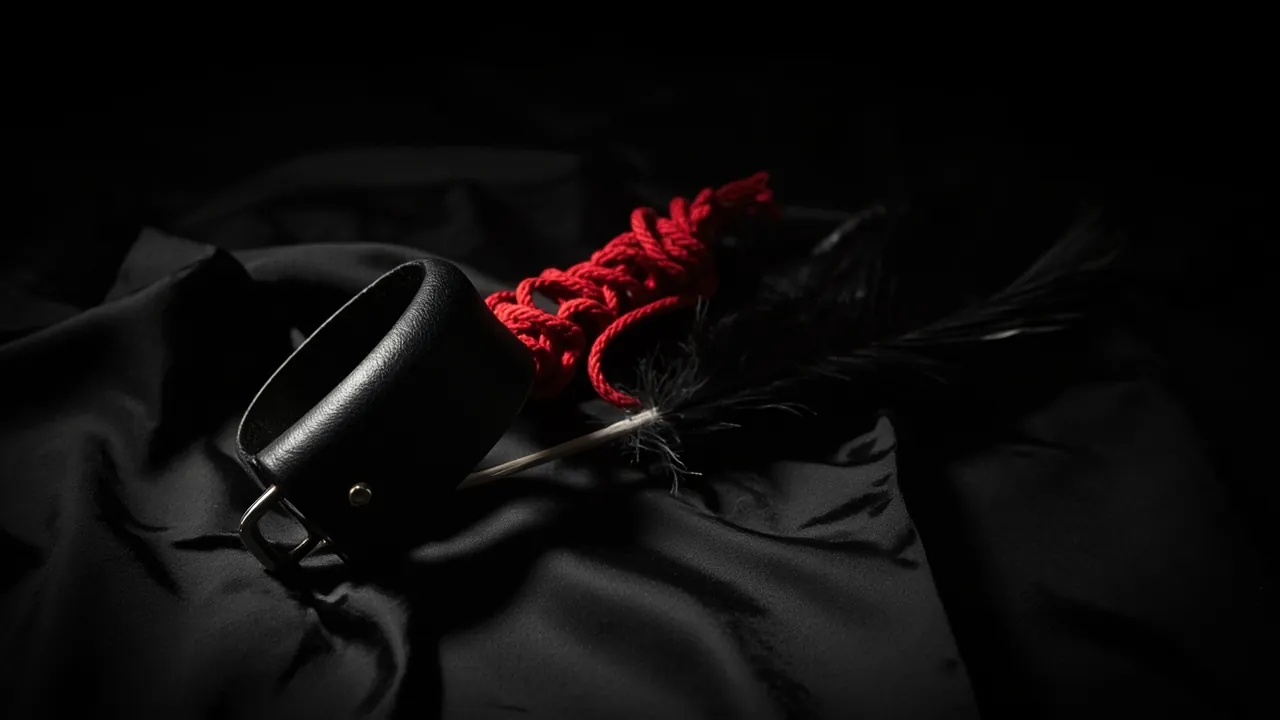
What masochism means today
Dictionary.com defines a masochist as a person who is gratified by pain or degradation, self-imposed or imposed by others. In BDSM, that pleasure is always consensual, and often mixed with the trust and release of handing control to someone. Being a masochist isn't the same as being submissive. Wikipedia notes that people can enjoy receiving sensation purely recreationally, without being psychologically dominated at all, and plenty of dominants are masochists, too.
Masochistic interests are common. In a 2017 study of 1,040 adults in Quebec, about one in four said they desired masochistic experiences and about one in five had tried them. The same study found masochism was linked with higher satisfaction with one's own sex life, not lower.
Tops, bottoms, dominants and switches
BDSM has its own vocabulary for roles, and the words aren't interchangeable. A top is whoever does the doing in a scene: tying, striking, directing. A bottom is whoever receives. Dominant and submissive describe power rather than action: the dominant holds authority, the submissive gives it. Most of the time the dominant also tops, but not always; a submissive can be told to top, and a dominant can choose to receive. A switch enjoys both sides, sometimes in different relationships, sometimes in the same evening.
Sadist and masochist sit across all of this. A sadist enjoys giving pain or intense sensation, a masochist enjoys receiving it, and either can be dominant or submissive. If the labels feel confusing, that's normal. They exist to make negotiation easier, not to put anyone in a box.
How common BDSM is
A representative study of 1,027 Belgian adults, published by Holvoet and colleagues in 2017, found that 46.8% had performed at least one BDSM-related activity and another 22% had fantasised about it. Fewer, 12.5%, did so regularly, and 7.6% identified as BDSM practitioners. Interest in dominant and submissive activities was about equal. In the US, a nationally representative survey published in 2017 found that at least 30% of adults had tried spanking and at least 20% had tried tying or being tied.
So BDSM isn't a fringe interest. It's a spectrum, from a little playful restraint that millions of couples try to full-time dynamics that a small minority live.
What psychiatry says now
For most of the 20th century, sadism and masochism were listed as mental disorders. That has been reversed. The American Psychiatric Association's DSM-5, published in 2013, states that most people with atypical sexual interests do not have a mental disorder; a diagnosis needs genuine personal distress, not merely distress about society's disapproval, or harm to others. The change, the APA said, makes it possible to engage in consensual atypical sexual behaviour without being inappropriately labelled.
The World Health Organization went further. Its ICD-11, which came into effect on 1 January 2022, removed sadomasochism as a diagnosis, following a working group's recommendation; the only remaining sadism diagnosis concerns non-consenting people. Research supports the shift. A 2013 study comparing 902 BDSM practitioners with 434 others found the practitioners had higher subjective wellbeing, and concluded that BDSM may be thought of as recreational leisure rather than an expression of psychological problems.
Consent, safety and the two mottos
BDSM's safety culture is built on two mottos. Safe, sane and consensual, used since the 1980s, emphasises keeping play within safe limits. Risk-aware consensual kink, proposed by Gary Switch in 1999, puts the weight on each person understanding and accepting the risks of what they choose. Both rely on the same practices: negotiating limits in advance, agreeing a safeword, often the traffic-light system of red for stop and yellow for slow down, and providing aftercare afterwards.
Serious harm is rare. A 2022 review in the International Journal of Legal Medicine found only 17 published BDSM-related deaths, nearly all involving the neck or breathing, and drugs or alcohol were involved in almost two thirds. The lessons are simple: nothing around the neck, no breath play, stay sober, and never leave a restrained person alone. The limits and safewords guide turns those principles into practice.
BDSM and the law
Consent doesn't make everything legal. In England and Wales, the 1993 case R v Brown established that consent is no defence to actual bodily harm, and later legislation confirmed that position for serious harm. Laws elsewhere vary. In practice that's another argument for the light, careful play most people prefer anyway, and for keeping anything risky well away from strangers.
Where to start
If BDSM is new to you, start by learning what you're actually curious about. A kink list is the easiest way, and the BDSM test can give you vocabulary to talk with. Then try one small thing with someone you trust, with limits and a safeword agreed first. Or watch a dominant woman run her room on cam for a few minutes; the strip at the top of this page shows who's live now.
Quick answers
What does BDSM stand for?
Bondage and discipline, dominance and submission, and sadism and masochism. The letters overlap on purpose: B and D, D and S, S and M.
What is a masochist?
Someone who takes pleasure, often sexual, in pain or humiliation, given by consent. In BDSM, a masochist enjoys receiving sensation; that's not the same as being submissive, though many people are both.
Is BDSM a mental disorder?
No. The current US psychiatric manual says most people with atypical sexual interests don't have a mental disorder, and the WHO's ICD-11 removed sadomasochism as a diagnosis altogether.
How common is BDSM?
Very. In a representative Belgian study, 46.8% of adults had tried at least one BDSM-related activity, and in the US about a third of adults have tried spanking.
What's the difference between a top and a dominant?
A top does the doing in a scene; a dominant holds the authority. They usually go together, but not always: a submissive can be told to top, and a dominant can choose to receive.