Guides
Chastity key safes, timer lockboxes and keyholding apps
Keyholders, tease and denial, live now
See allA chastity key safe is simply somewhere to put the key so you can't get to it. There are three kinds: combination boxes whose code someone else controls, battery timer boxes that won't open until a countdown ends, and app-linked or smart devices. Each lets a keyholder hold the key without being in the room, and each can fail in its own way. That's why the first thing to plan isn't the lock, it's the way out. This page covers how each type works, what's gone wrong with them, key necklaces, whether keys are universal, and the emergency plan that has to sit underneath all of it. For the person on the other end, read our chastity keyholder guide.
Combination key safes and the photo method
The most common setup for online keyholding is a small combination lockbox, the kind sold for spare house keys, plus an app that hides the code. Chaster's documentation lays out the method. You open the lockbox, put the chastity key inside, scramble the dials while looking away, and photograph them. The app then holds the combination "secret until the timer ends". Chaster calls this the combination picture method and recommends it, because you never see the code at all. The alternative is to let the app generate a combination, which you see briefly when you set it and which is "revealed again at the end of your session". Either way, delete the photo once the lock has started.
Two settings matter more than any other. An emergency release, which Chaster calls emergency unlocking, lets you end the session immediately and retrieve your combination without asking the keyholder, but the session then ends permanently. And if you disable recovery, Chaster says plainly that its support "cannot recover the combination of a deserted lock". Choose those settings with your head, not your libido.
Timer lockboxes
A timer box needs no keyholder at all. You put the key in, set a countdown and close the lid. The best known is the kSafe, also sold as the Kitchen Safe, which was designed to lock away snacks and phones rather than keys. Its maker's FAQ says it runs "as short as one minute or as long as ten days", that it was designed to open only once the timer reaches zero, and that you get "five seconds to cancel" after pressing the dial.
The details in that FAQ are the ones that matter for chastity. If the batteries die or are removed, the timer stops counting down and the box "will stay locked". The maker lists a lid sticking to its base and electronic failure as known problems, warns against using it for anything health-critical, and says forcing the lid voids the warranty. Other boxes behave differently: one lockbox manual says its timed mode can't be opened early but offers an override by email, with a reply promised within 24 hours. Hobby blogs describe most timer boxes as USB-rechargeable with a maximum of four to ten days.
The lesson is simple. A timer box is a good way to make a lock honest. It's a terrible place to keep your only key.
Apps, wifi boxes and smart cages
Apps such as Chaster, ChastiSafe and Emlalock work with the combination boxes above; our keyholder guide compares them. Wifi or Bluetooth key boxes are a different matter. Searches turn up plenty of generic smart lockboxes made for estate agents and holiday lets, with app control and timed codes, but we couldn't find a chastity-specific wifi box with claims we could verify. One generic listing gives a Bluetooth range of about a metre, with remote control only through a gateway sold separately, so read the small print before relying on one.
Smart cages put the lock and the app on the device itself, and the best-known one shows the risk. On 6 October 2020 the security firm Pen Test Partners published its findings on the Qiui Cellmate, a Bluetooth cage controlled by an app. They'd reported the flaws to the maker on 20 April. The API could be abused to lock wearers remotely, and the researchers found the cage had no physical release and "no emergency override function either"; an angle grinder or similar tool would be needed to cut a wearer free. Their advice was blunt: your local emergency department will probably have the right tools. In January 2021 an attacker locked users' devices and demanded 0.02 bitcoin. The distributor later pointed users to a newer app version and a screwdriver "emergency escape" that voids the warranty, and said support could release devices remotely.
Nobody has reported a similar incident with a smart cage since, as far as we could find, but the principle stands. Anything that depends on an app, a server or a company's support desk can fail at the worst moment, so it needs a physical way out.
The emergency plan comes first
Chaster's own documentation puts it plainly: keep an emergency key or another way out within reach, especially for longer sessions, because its support "is not an immediate emergency-release service". Before any lock starts, you should be able to answer one question without hesitating: if this has to come off in the next ten minutes, how?
- A spare key you can reach. In a sealed, signed envelope, a separate combination box whose code you can retrieve, or with a trusted person who lives nearby.
- Something breakable. Numbered plastic seals can be cut with scissors, and the number shows afterwards whether one was replaced.
- Worst-case plan. If a ring won't come off or swelling starts, go to an emergency department or a fire station. Don't wait and don't improvise.
Real cases show why. In 2007 firefighters in Margate needed hydraulic cutters and about two and a half hours to free a man from a padlock whose keyhole had been sealed with superglue, so even the right key wouldn't have helped. Wikipedia records a 2008 case of a man cut free from a titanium device after losing the keys. And a 2010 report in the Canadian Urological Association Journal described a patient whose metal rings had been on for 72 hours: bolt cutters failed because of swelling, and surgeons spent about 45 minutes in theatre drilling them off, warning that such cases can end in skin loss or worse. Our chastity cage safety guide lists the warning signs. This page is general information, not medical advice.
Key necklaces and keyholder jewellery
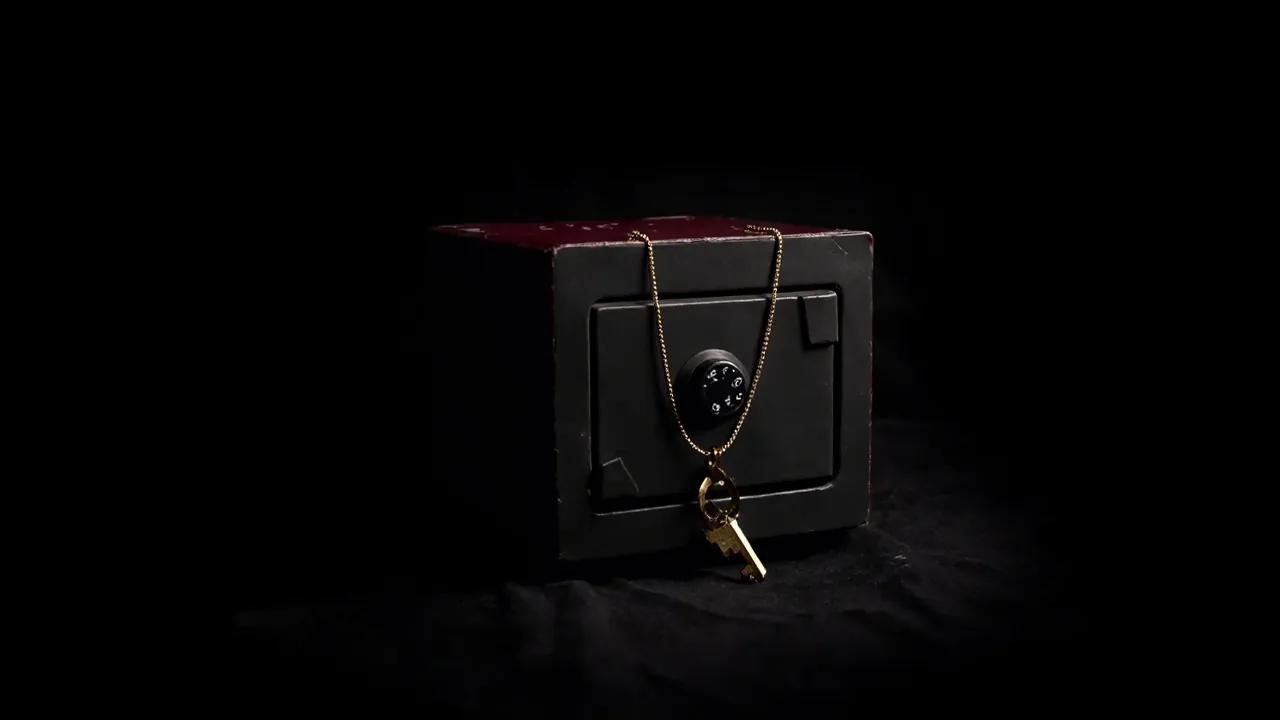
The key worn on a chain is the classic symbol of keyholding. A fact-checking site describes a key necklace as "commonly used within the male-chastity kink to mark a keyholder", while noting it's "not a reliable indicator" on its own, because key pendants are also ordinary fashion. That ambiguity is part of the appeal: she can wear the actual key in public and nobody but you knows what it opens.
Couples choose between wearing the real key, which makes the keyholder the emergency plan, and a symbolic one, with the real key in a safe. Lockets, bracelets and anklets all work for discreet options. If she wears the only key, agree what happens when you're apart, because a keyholder on a train three hours away is not an emergency release.
Are chastity keys universal?
No, but they're less unique than you'd hope. A 2025 guest post on a femdom newsletter says many locks sold with inexpensive cages "use one of a handful of keys", and that barrel locks are usually clones of one German design. In practice, a determined wearer can often buy a matching key, which is why keyholders who care about honesty use numbered seals or individually keyed locks. If you lose a key, ask the cage's maker or seller for a replacement lock set rather than forcing anything, and never cut near the body yourself.
Choosing where the key lives
The right setup depends on distance and trust. If your partner lives with you, she can simply keep the key, ideally with a spare sealed away. Online keyholding needs a combination box and an app, with an emergency release you've agreed on. For a self-lock, use a timer box plus a spare you can get to. Whatever you choose, test it unlocked first, wear the cage for short sessions while you learn its quirks, and read our guides to cage sizing and long-term wear before you lengthen anything. When you'd rather hand the key to a dominant woman than to a box, the strip at the top shows keyholders, teasers and denial specialists live now.
Quick answers
What is a chastity key safe?
A lockbox that holds the key to a chastity device so the wearer can't reach it. It's opened by a combination someone else controls, by a timer, or by an app, which lets a distant keyholder hold the key without ever touching it.
How does a timer lockbox work?
You put the key inside, set the countdown and close the lid. The box stays locked until the timer reaches zero. The kSafe, a popular habit-control box, runs from one minute to ten days and gives you five seconds to cancel after you start it.
Can a timer lockbox be opened early?
Usually not, by design. The kSafe's maker says it only unlocks when the timer reaches zero. Some other brands offer an override through customer support, which can take a day, so never treat a timer box as an emergency release.
What happens if the batteries die in a timer lockbox?
On the kSafe, the timer stops counting but the box stays locked, and the maker warns that lids can stick and electronics can fail. That's why a timer box should never hold your only way out.
Are smart chastity cages safe?
Treat them with caution. In 2020 researchers found the Qiui Cellmate's app could be abused to lock wearers remotely and that the cage had no physical release; in January 2021 an attacker demanded 0.02 bitcoin from users. Keep any app updated and have a physical way out.
What should I do if I can't get a chastity cage off?
Go to an emergency department or a fire station rather than improvising, and go early, because swelling makes removal harder by the hour. In one published case bolt cutters failed and the rings had to be drilled off in an operating theatre.
Are chastity keys universal?
No, but many cheap cages share one of a handful of key types, so a matching key is easier to find than you'd think. Locks can be bought individually keyed, and numbered plastic seals prove whether a lock was opened.
What does a key necklace mean?
In male chastity, a key worn on a necklace is a common way for a keyholder to show she holds it. Keys are also ordinary jewellery, though, so a key pendant on its own means nothing for certain.
Where should I keep an emergency key?
Somewhere you can reach fast in a real emergency but won't use on a whim: a combination box whose code you can retrieve, a sealed envelope, or a trusted person nearby. Chaster's documentation says to always keep an emergency key or another way out accessible.