Guides
BDSM collars: what being collared means, and day collars
Leather and strict mistresses live now
See allA BDSM collar is any collar worn to show that its wearer is submissive to, or owned by, a particular dominant. Wikipedia defines it as a device of any material worn by a person to indicate their submissive, slave or owned pet status in a BDSM relationship, and says the wearer is collared. Some collars mark the start of a scene; others mean something closer to a wedding ring. This page explains what being collared means, the different kinds of collar, discreet day collars for everyday life, collaring ceremonies, and the one safety rule that every collar follows.
What a BDSM collar means
A collar can carry two quite different meanings. In a scene, putting a collar on can signify that negotiated play has begun, and taking it off that it's over. In a relationship, a collar can show that someone is spoken for, as Wikipedia puts it, like a wedding band. The BDSM glossary notes that a relationship collar often differs from a scene-specific restraint, and many couples keep both: one for play, one for life.
In femdom, the collar is one of the clearest symbols of who belongs to whom. She chooses it, she puts it on, and she decides when it comes off. That moment, small as it is, can mean more than anything else in the scene.
Collared meaning
Wiktionary's BDSM sense of collared is committed to submit to a particular dominant, and the BDSM glossary describes a collared submissive as one who is owned, usually but by no means only in a loving, intimate relationship. Collaring is the ceremony at which a dominant commits to a submissive, much like a wedding or other contract. Outside kink, of course, being collared also means being arrested, which explains some confusing search results.
Types of collar
- Play collars. Usually leather, with buckles and D-rings, made for scenes and often paired with cuffs.
- Relationship collars. Chosen to mark a commitment, worn at home or whenever the dynamic is on.
- Day collars. Everyday versions, usually jewellery that passes unnoticed in public.
- Symbolic collars. Wikipedia mentions bracelets and ankle chains that can pass in non-BDSM situations.
- Posture collars. Rigid collars wide enough to restrict neck movement, which call for extra care.
- Pet play collars. Common in pet play: a 2022 study found 78.44% of 733 pup players owned one.
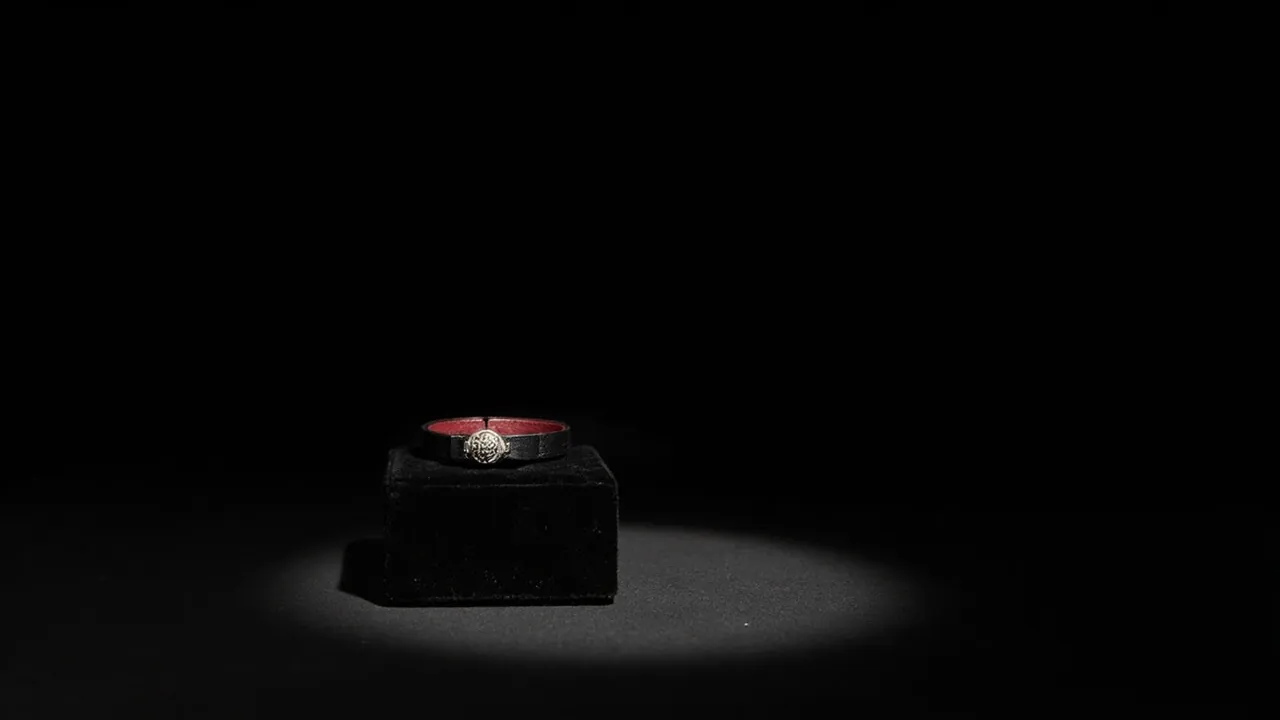
Day collars and discreet options
A day collar is made to be worn in ordinary life, so most look like jewellery. Day collars can be completely vanilla or obviously a collar, depending on how open a couple wants to be. Discreet ideas that work:
- A slim chain necklace, perhaps with a tiny lock or key pendant.
- A plain velvet or leather choker, which in fashion means nothing at all.
- A bracelet or ankle chain, which Wikipedia notes can pass in non-BDSM situations.
- A ring worn on an agreed finger.
- A pendant with a small O-ring, the classic quiet signal.
That last idea has a story. The Ring of O takes its name from the 1954 novel Story of O, though the ring design was first pictured in 1989, in the German magazine Schlagzeilen. Since the 1990s it has been worn mainly in continental Europe, usually on the right hand by submissives and the left by dominants, to signal a steady relationship. Bear in mind that everyone in a choker is not kinky; as Wikipedia notes, one cannot assume that. And think about practical life: dress codes, airport scanners, and medical scans. The NHS asks patients not to wear anything with metal in it, including jewellery, before an MRI.
Collaring ceremonies
Some couples mark a collar with a ceremony. Wikipedia describes these as simple or elaborate, often witnessed by invited friends, and sometimes as involved as a wedding. Many follow a written agreement; our page on BDSM contracts covers those. Neither the ceremony nor the contract carries legal force. What they do carry is meaning, and a good ceremony usually includes a few spoken words from each person, the moment of collaring, and a date to review the arrangement.
Collars can also be returned, and endings deserve care too. The educator Mollena Williams-Haas, International Ms Leather in 2010, won a writing award in 2013 for an essay on collars, closure and owning herself. A collar marks a commitment both people choose, and either can choose to end it.
Where collars come from
Collars have been part of leather culture from the start. Wikipedia notes that early public displays of BDSM were mainly limited to fashion items such as collars and cuffs, which let people signal their interests without saying a word. In femdom imagery, the collar on the submissive's neck and the leash in the mistress's hand became one of the most recognisable images of the whole scene. Our guide to slave training covers the protocol that often comes with a relationship collar.
Collar safety: the neck is not for play
The single most important rule is that a collar must never restrict breathing or blood flow. The evidence here is grim and clear. A 2021 review of 17 published BDSM deaths found strangulation during erotic asphyxiation was the most common cause, at 88.2%, that drugs or alcohol were involved in 64.3%, and that the partners were usually not new to BDSM. Two of the deaths involved a collar or chain on the neck fixed to a ceiling or a column. A 2026 paper by sex researchers and kink educators warned that pressure on the neck's arteries risks harm potentially even at light pressures. The UK's Institute for Addressing Strangulation puts it simply: there is no safe way to strangle. In England and Wales, non-fatal strangulation has been a specific offence since 2022, with a maximum of five years.
- Fit it loosely. Common advice is that a finger or two should slide easily underneath.
- Never attach a collar to anything fixed, and never pull on a leash hard.
- Never leave someone alone while collared and restrained.
- Keep keys, hex keys or safety shears within reach for a quick release.
- Take it off at once for any discomfort, dizziness or difficulty breathing.
- Watch for skin reactions; the NHS notes some metals, including nickel, cause allergic contact dermatitis.
Collars on cam
A mistress on cam can't buckle a collar on you, but the ritual translates surprisingly well. Some subs put on a collar, or their day collar, at the start of every session at her command, and take it off only when dismissed. It's a small act that changes the whole tone of a call. The strip at the top of this page shows leather and strict mistresses live now, and our limits guide covers what to agree before any session.
Quick answers
What does a BDSM collar mean?
It signals that the wearer is submissive to, or committed to, a particular dominant. Depending on the couple it can mark the start of a scene or a lasting commitment, much like a wedding ring.
What does collared mean?
In BDSM, committed to submit to a particular dominant, usually in a loving relationship. Outside kink it's also slang for being arrested, which is worth remembering when you search.
What is a day collar?
A collar designed for everyday life, usually a piece of jewellery that looks ordinary to outsiders but carries meaning for the couple. It's worn instead of a play collar outside scenes.
What are discreet day collar ideas?
A slim chain necklace, a simple choker, a bracelet or ankle chain, a ring, or a pendant with a small lock or O-ring. Anything works if both of you know what it means and it never restricts breathing.
Is a collaring ceremony legally binding?
No. It's a ritual, sometimes as involved as a wedding and often witnessed by friends, but it has no legal force. The commitment it marks is real only as long as both people choose it.
Are BDSM collars safe?
As symbols, yes. A collar must never restrict breathing or circulation, never be fixed to anything, and always be removable quickly. Pressure on the neck is dangerous even when it's light.
Should a BDSM collar be locked?
Only if the key is always within reach. Some collars need a key or a hex key to remove, and any collar must come off quickly for a medical need, an emergency or simple discomfort.